
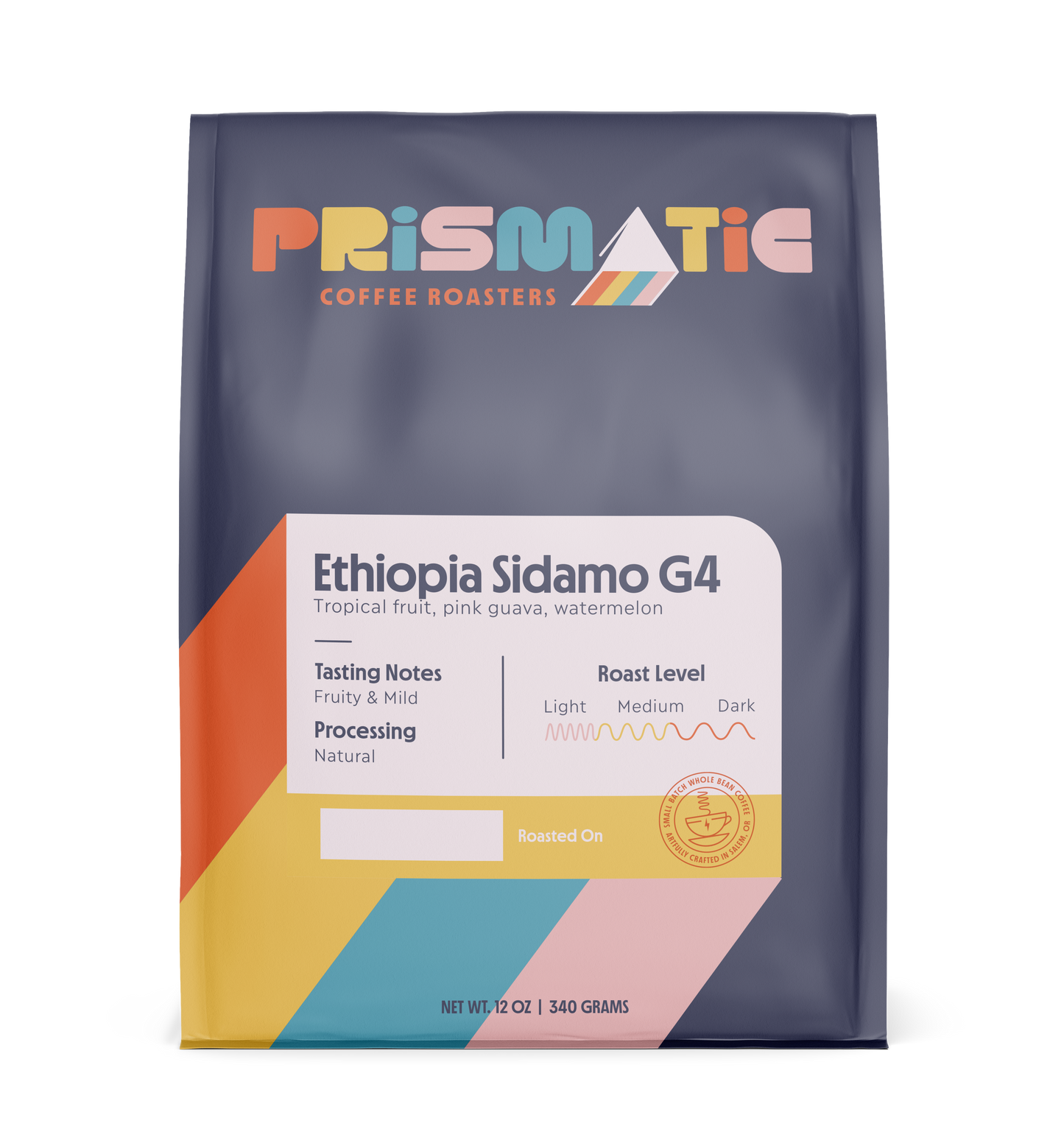
Ethiopia Sidamo G4
Ethiopia Sidamo G4
Couldn't load pickup availability
DESCRIPTION
Coffee is ancient in Ethiopia, but coffee farming is not. By the end of the 9th Century coffee was actively being cultivated in Ethiopia as food, but probably not as a beverage. It was the Arab world that developed brewing. Even as coffee became an export for Ethiop... READ MORE
Coffee is ancient in Ethiopia, but coffee farming is not. By the end of the 9th Century coffee was actively being cultivated in Ethiopia as food, but probably not as a beverage. It was the Arab world that developed brewing. Even as coffee became an export for Ethiopia in the late 1800’s, Ethiopian coffee was the result of gathering rather than agricultural practices. A hundred years ago, plantations, mostly in Harar, were still the exception, while “Kaffa” coffee from the southwest was still harvested wild. In 1935, William Ukers wrote: “Wild coffee is also known as Kaffa coffee, from one of the districts where it grows most abundantly in a state of nature. The trees grow in such profusion that the possible supply, at a minimum of labor in gathering, is practically unlimited. It is said that in south-western Abyssinia there are immense forests of it that have never been encroached upon except at the outskirts.”
As the birthplace of coffee, Ethiopia is home to more species of coffee plants than any place on earth, much of it still growing wild, and much of it still undiscovered. All Ethiopian coffee is Arabica and at least 150 varieties are commercially cultivated. Traditionally, these have simply been labelled as “heirloom varietals”; however, this is changing as the Jimma Agricultural Research Center works to identify species. Although there are a few estates in Ethiopia, 95% of coffee is grown by small land holders in a wide variety of environments, including “coffee forests” where coffee grows wild and is harvested by the local people. All specialty grade Ethiopian Coffee is grown above 4,000 feet and most above 6,000. In the highlands of Sidamo and Yirgacheffe, coffee can grow above 7,000 feet.
READ LESSTasting Notes:
Tropical fruit, pink guava, watermelon
Certifications:
Natural Process
Roast Level:
Light/Medium

THE PRISMATIC PROCESS
We know that a global agricultural product like coffee has large social, economic, and environmental footprints and we take our responsibility as a part of the chain from farm to cup seriously.our goal is transparency and accountability in our sourcing, roasting, certifications, and shipping. We source organically grown beans from around the world, roast them in small batches and ship them directly to your door or your favorite store.
As we grow we will work within our supply chain to become carbon neutral and minimize our impact on the Earth. Our coffee (and our forthcoming Cold Brew) are available in 100% recyclable cans since most “recyclable” coffee packaging can only be processed inexpensive, specialized facilities. If you have any questions or suggestions on how we can improve our process, reach out and let’s talk!
COFFEE SUBSCRIPTIONS
Prismatic can deliver fresh-roasted coffee straight to your door! Choose our rotating option and we’ll send you the best beans from around the world, roasted in small-batches, and shipped at the peak of freshness. If you need all the flavor without the jitters, our water-processed decaf option is for you.